Paper types and GSM explained: standard, bond, thick, glossy and card stock
30 October 2026 · 4 min read
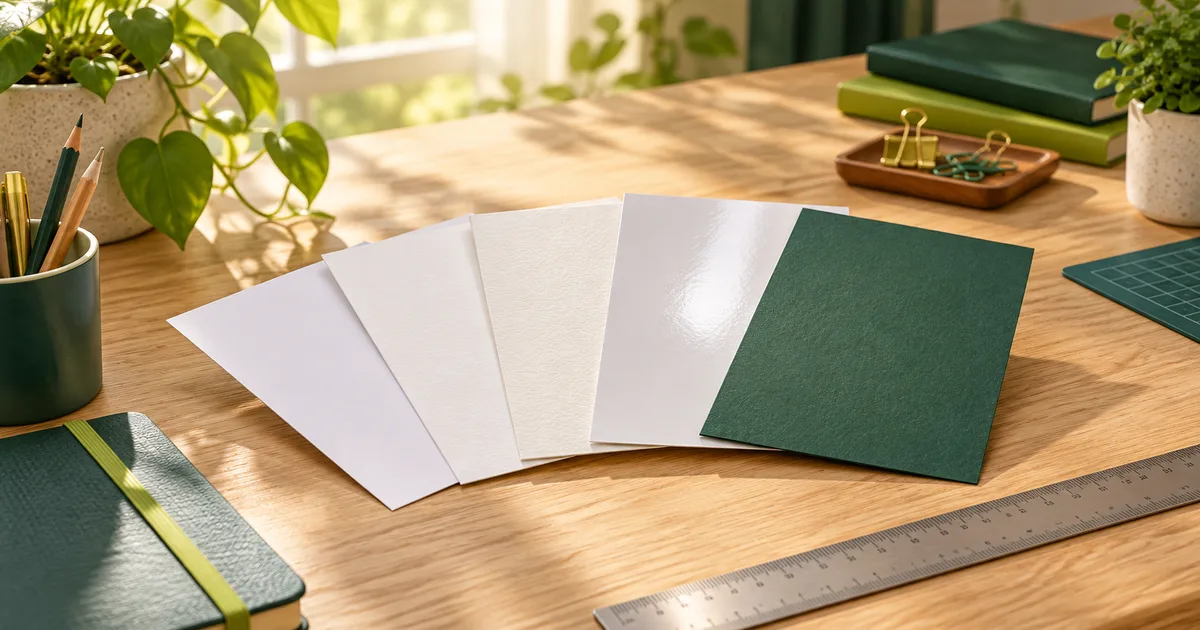
GSM means grams per square metre. A higher number means a heavier, thicker sheet. For most printing, the standard paper is fine, and an upgrade is worth it only when the job calls for it.
The five papers we print on
- Standard 70 GSM: everyday notes, forms and drafts. It is included in the printing price.
- Bond 80 GSM: a smoother, crisper sheet for resumes, letters and official documents.
- Thick 110 GSM: a firmer sheet for reports. It also reduces ink showing through when you print double sided.
- Glossy 180 GSM: a shiny coated sheet that makes colour pages and photos look rich.
- Card stock 280 GSM: a stiff board for covers, certificates, invitations and cards.
How the upgrade is charged
Standard paper is included. For the other papers, a small extra amount is added per sheet. The calculator shows the extra next to each paper, so you can see it before you choose.
Which one should you pick?
- Study notes: standard.
- Resume or official letter: bond.
- Project report with double sided pages: thick.
- Colour brochure or photo pages: glossy.
- Report cover or certificate: card stock.
Compare papers
Pick a paper in the calculator and see the extra per sheet.